
Vizier Hor Statue: Ancient Egyptian Art, Third Intermediate Period
$121.00
The statue of the vizier Hor is a remarkable piece of ancient Egyptian art from the Third Intermediate Period. It depicts the vizier seated in the traditional way, with one…

- Description
Description
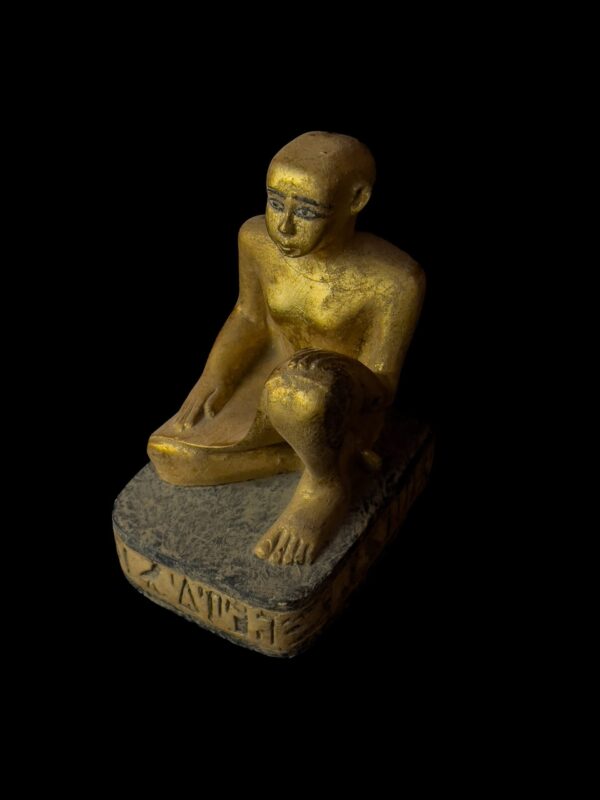
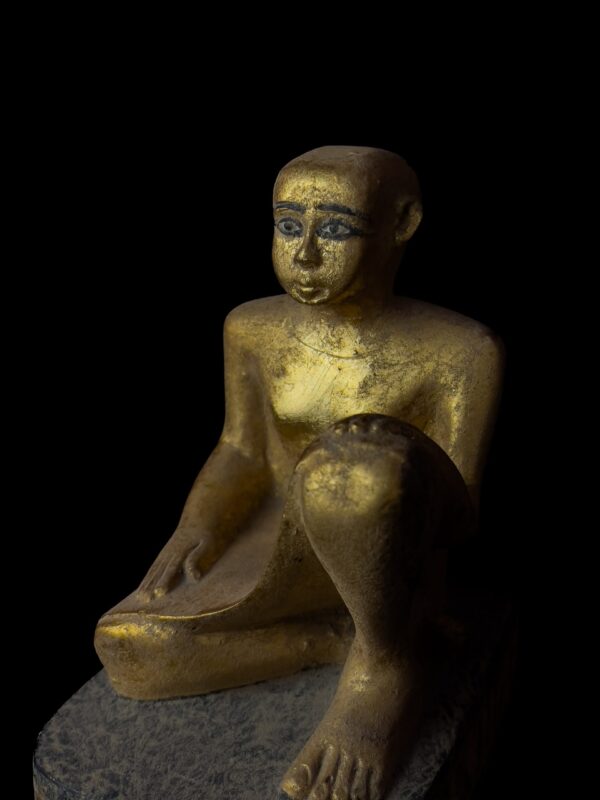
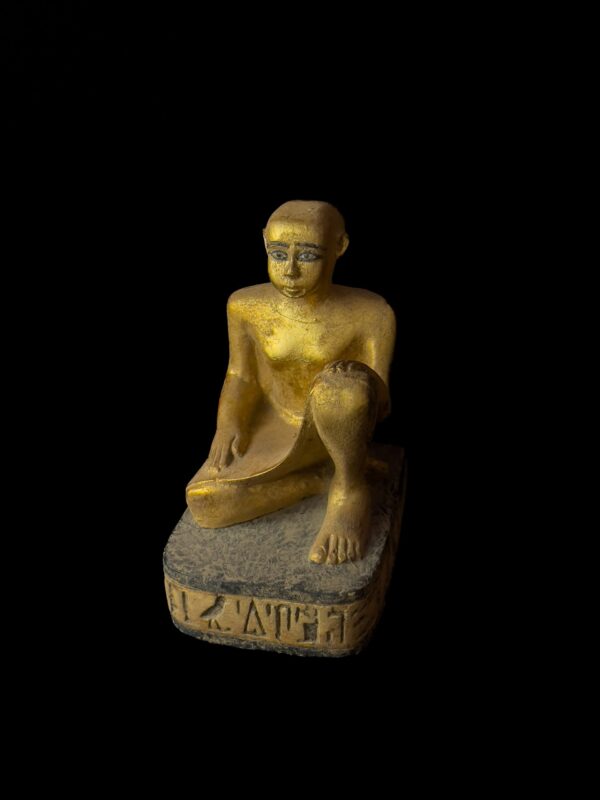
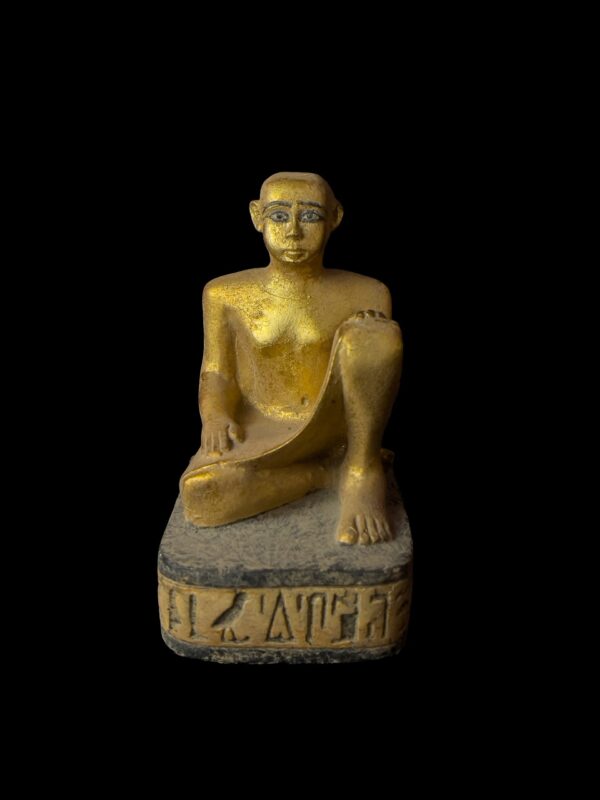
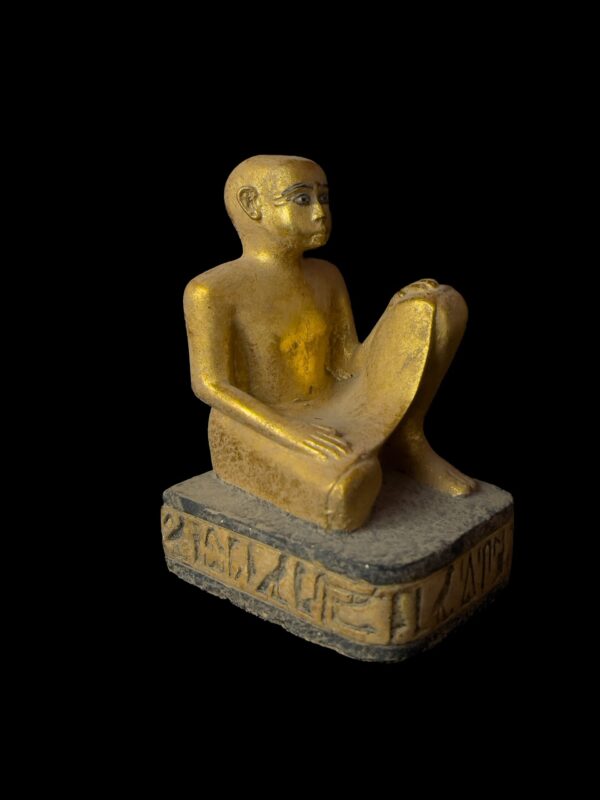
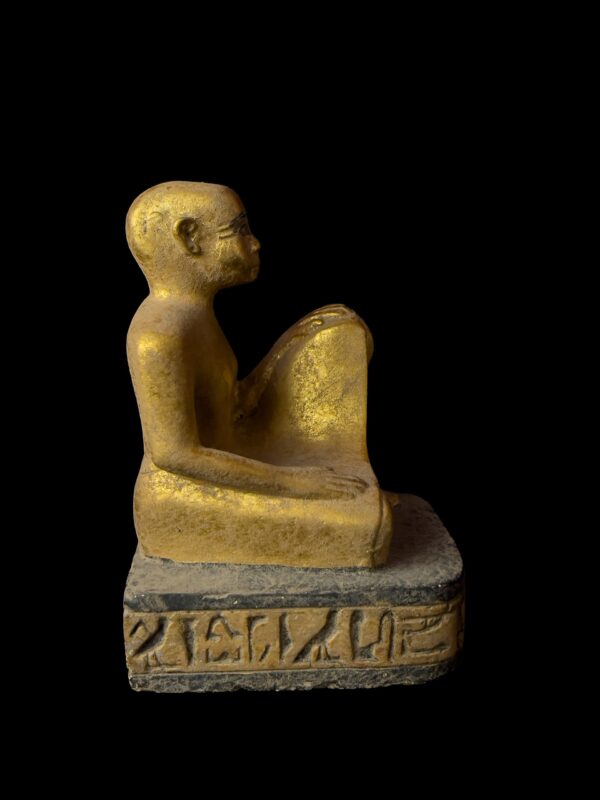
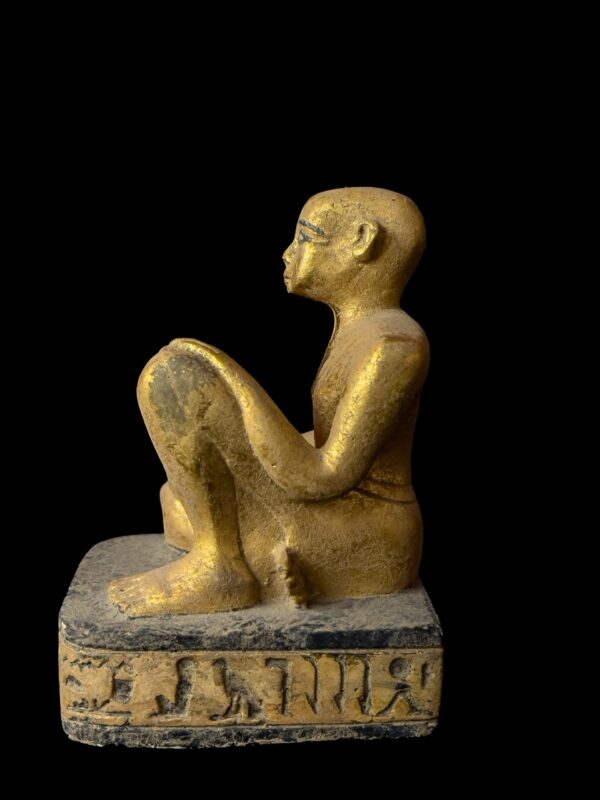
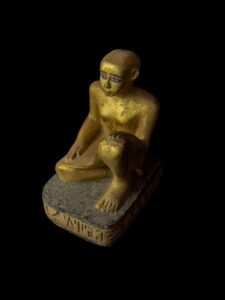
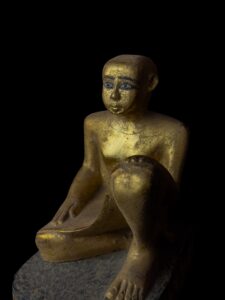
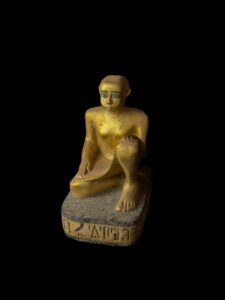
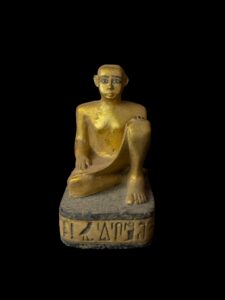
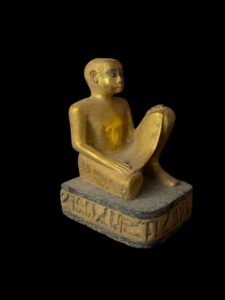
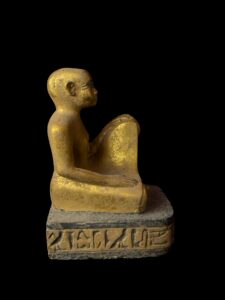
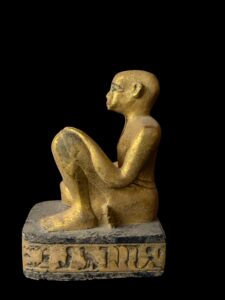
The statue of the vizier Hor is a remarkable piece of ancient Egyptian art from the Third Intermediate Period. It depicts the vizier seated in the traditional way, with one leg bent up against his chest and the other resting on the ground. This posture was commonly used by Egyptian peasants and is still used to this day.
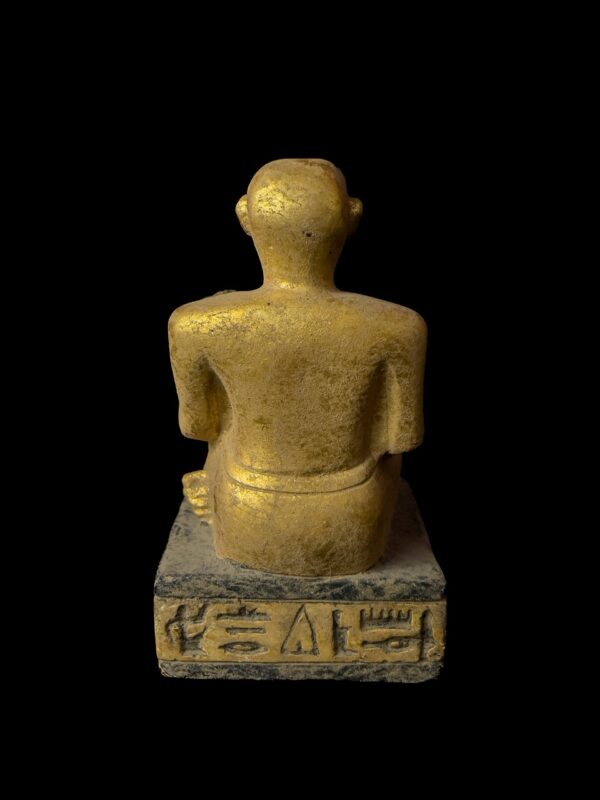
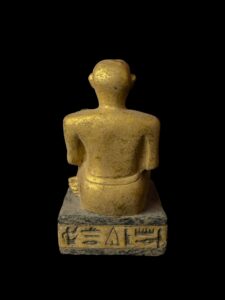
Hor is shown with a shaved head, delicate features, round cheeks, and a small mouth. He wears a kilt that is held up by a large belt inscribed with details of his life, including his titles and those of his father, who was a priest during the 22nd Dynasty.
The base of the statue is inscribed with an offering formula to Amun-Ra, the god who allowed Hor to erect a statue of himself in the god’s temple. The inscription also refers to the king’s appointment of Hor as vizier while he was still Superintendent of the Treasury of the Temple of Amun.
Unfortunately, the name of the king is not specified in the inscription, but we know that Hor’s father was named luatjek, which suggests the period of the 22nd Dynasty. This hypothesis is supported by the style and pose of the figure.
During the 22nd Dynasty in Upper Egypt, there were two viziers. One is referred to during Year 14 of the reign of King Takelot I, and the other is cited in a document during Year 8 of King Shoshenq III. The statue of Hor was found in Karnak Cachette and is now in the Egyptian Museum in Cairo, with the inventory number JE 37512.
The statue of the vizier Hor offers a glimpse into the life of one of the most important officials in ancient Egypt. The inscription on the base of the statue provides valuable information about Hor’s life and the political situation during the 22nd Dynasty.
Frequent Asked Questions
Our artisans work with authentic materials — basalt, limestone, granite, alabaster, porcelain, and cast bronze — sourced locally in Egypt. Every piece is a handcrafted replica, not an original antiquity. Each product page lists the specific material, weight, and approximate dimensions, and small variations in color, texture, and finish are natural to handmade work.
Yes. We regularly make custom replicas, personalized cartouches with your name in hieroglyphs, scaled-up museum replicas, and one-off commissions. Email us a description or reference image with your preferred size, material, and budget, and we'll send back a quote and timeline — custom projects usually take 2–6 weeks depending on complexity.
Returns are accepted within 30 days in original condition; the buyer covers return shipping. If an item arrives damaged or significantly different from its listing, send us photos within 7 days of delivery for a replacement or full refund. Custom and personalized pieces are non-refundable unless they arrive defective.
We ship worldwide, with standard delivery typically 7–14 business days after dispatch. Because every piece is stone, ceramic, or metal, we allow 1–3 business days to pack each order in a custom protective crate before it ships.
Yes — we ship worldwide. Shipping is calculated at checkout based on your destination and the item's weight. Any customs duties or import taxes are set by your country and are the buyer's responsibility, so they are not included in the checkout total.
As soon as your order is dispatched we'll email you a tracking number. You can also follow your shipment any time from your account under Track Your Order. If you haven't received tracking within a few days of ordering, contact us and we'll look into it right away.
Contact us with clear photos within 7 days of delivery and we'll arrange a replacement or a full refund. Every piece is packed in a custom protective crate to minimize the risk of damage in transit — but if something does go wrong, we'll make it right.
Reviews
There are no reviews yet.